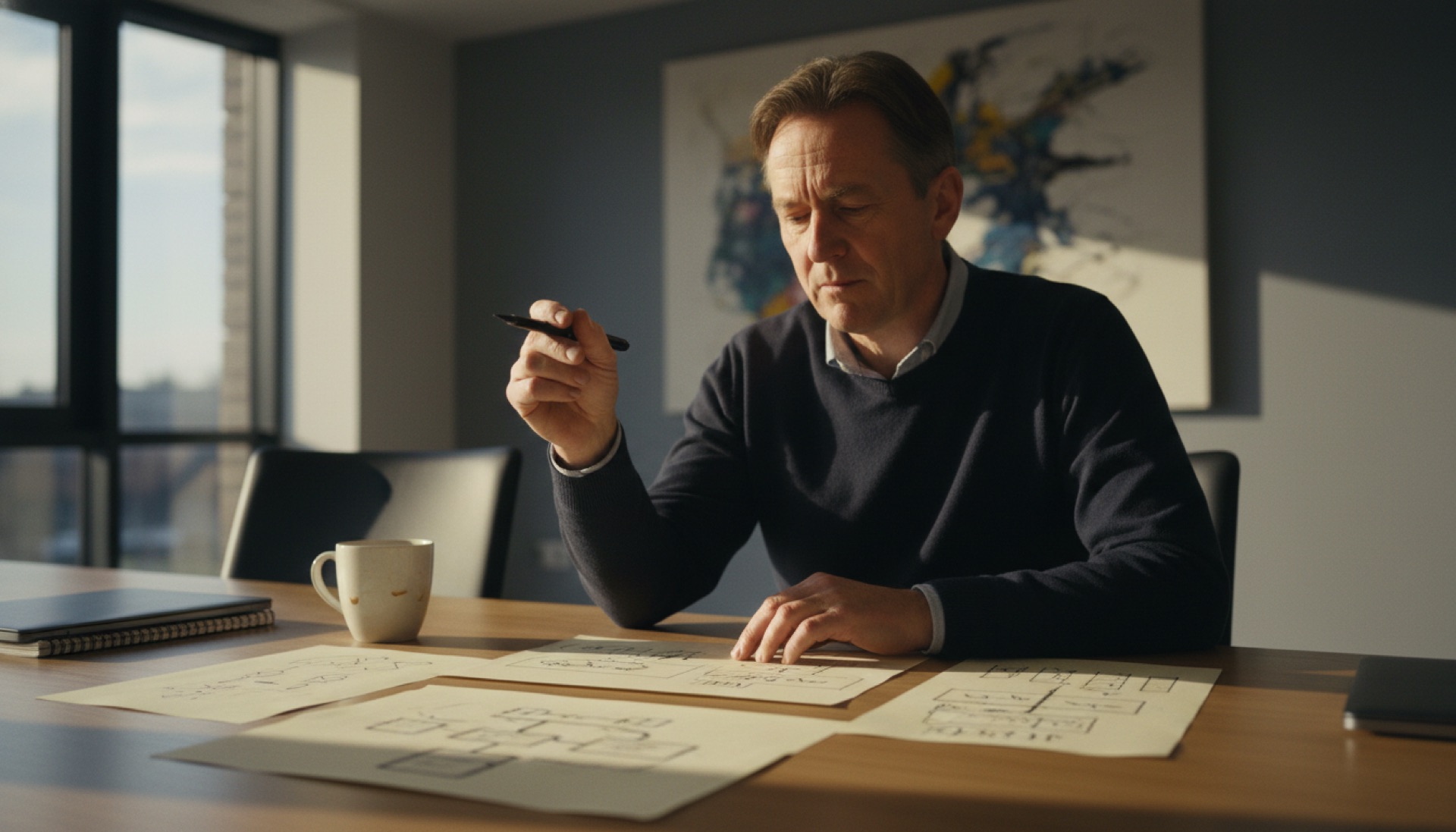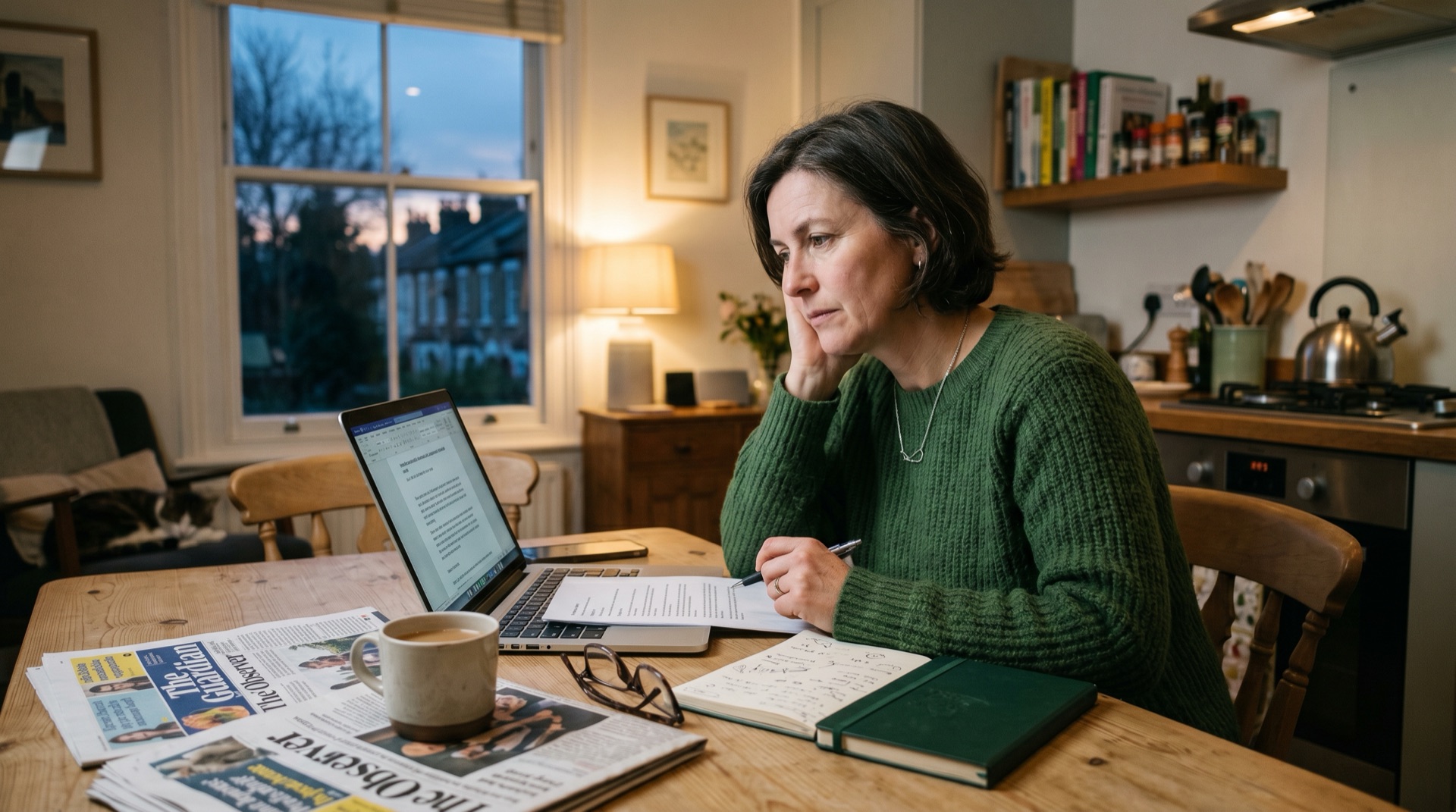
A founder of a 14-person clinical practice sits at her kitchen table on a Sunday evening, the second weekend in a row spent trying to write the SOP for a new patient-onboarding flow. Six pages in, she realises she is documenting only the visible steps. The actual decisions she makes (when to flag a patient for a senior clinician, when to push appointment timing, when to escalate billing) remain in her head, off the page entirely.
She has heard the practice manager mention “those AI tools that record the screen and write the SOP for you.” Her question is honest. Would that have saved her this weekend, and what would it have missed?
The traditional SOP cycle is slow and partial
A typical 50-person business has 15 to 20 percent of its critical processes formally documented. The remaining processes live in email threads, recorded calls, past project files, and people’s heads. The SOPs that exist are often out of date. A team member writes the process down, the founder reviews, the team member rewrites. Days pass between the work and the artefact, and the artefact is incomplete because the founder’s tacit knowledge stays out of it.
That is where many owner-managed businesses sit when AI-driven recording tools become a serious option.
What the new pattern actually looks like
The shift is from writing the SOP by hand to recording yourself doing the work and letting AI structure it. Tango records the screen and emits structured documentation with metadata including XPaths, CSS selectors, and decision logic. Trainual builds AI-powered SOP generation into its LMS. Loom AI handles async video walkthroughs with transcription and summarisation. Otter and Fireflies handle conversation capture, turning it into structured outputs.
The output of these tools is metadata, not just text. That is what makes the documentation consumable by AI agents and automation platforms downstream.
What the data says
A professional services firm using Tango-based process capture compressed first-cycle documentation from around 20 hours to 3 hours. The second cycle, when the process changes, takes about 45 minutes because the AI compares old and new recordings and flags what changed. For a firm with 30 to 50 critical processes, that is a multi-month documentation programme done in weeks.
The maths is real. Where the pattern earns its place, it earns it cleanly.
Failure mode 1: judgement does not survive the recording
A recording of a founder handling a difficult customer escalation captures the words exchanged and the outcome. It misses the founder’s internal model of when to push back, when to escalate, and when to absorb cost. If a team member follows the SOP mechanically, they will make decisions technically consistent with the recording and strategically wrong for a different customer. The recording is faithful; the SOP misleads.
This is the most common failure mode I see in firms rolling out recorded SOPs. The first round of recordings goes well for mechanical processes (data entry, system updates, routine compliance), then the team tries to apply the same approach to judgement-heavy work and the outputs go sideways. The recording cannot capture what the founder did not say.
Failure mode 2: SOPs decay if you don’t maintain them
Workflows change, people find shortcuts, and new tools come in. If nobody reviews the SOP quarterly, it is out of date inside two months. The SOP-creation moment is the easy part of the work; the maintenance loop is the hard part. Without the loop, the recorded-SOP investment leaks away over the months that follow.
Trainual and Process Street build maintenance loops directly into the system, flagging unreviewed SOPs, prompting owners to update them, and version-controlling changes. Tools that do not include maintenance loops produce SOPs that decay. The team stops trusting them after a couple of months because they are out of date, and the tribal-knowledge problem comes back. The discipline is quarterly review, owned by a named person, with a calendar reminder. Not glamorous; load-bearing.
Failure mode 3: judgement work resists documentation
A founder who handles pricing on a call basis has an unspoken framework about when to negotiate and when to hold the line. Recording the conversation and writing it as an SOP and expecting a team member to execute it independently is naive. The team member either applies the SOP rigidly (loses deals or gives away margin) or ignores it (falls back to asking the founder).
For judgement work, the right artefact is a decision framework with worked examples. For pricing decisions, that means a scorecard with the variables that matter (deal size, margin sensitivity, strategic value of the customer, urgency on their side, your firm’s bandwidth) and three to five worked examples showing how the founder weighted them in past cases. The team member uses the framework and the examples to reach a decision; the framework is teachable, the examples are illustrative, and the founder reviews exception cases for a few months until the team has internalised the pattern. This works for pricing in a way an SOP never does.
Where the pattern works cleanly
The pattern earns its place on repeatable, mechanical, low-judgement work where the founder is fast at execution but not actually adding judgement value. Customer onboarding sequences, data entry and reconciliation, compliance checklist execution, routine reporting generation, and supplier ordering are the processes where recording-based SOP capture cleanly substitutes for the founder’s involvement and produces an artefact the team can use.
For founder-dependency purposes, this is the obvious win. The mechanical work routes away from the founder; the founder’s bandwidth lifts; the firm’s documentation gets stronger. The discipline is to be honest about which category each process falls into and to use the right artefact for each.
The operating discipline
Three rules. Every AI-generated SOP gets reviewed by the human who actually does the work before publication. Every SOP gets a quarterly maintenance review owned by a named person. Judgement-heavy work gets a decision framework with worked examples instead of a process script. The founder is honest about which category each piece of their own work falls into.
If you want a second pair of eyes on the process-versus-judgement split for your specific firm, book a conversation.