
Mata, Ayinde, Al-Haroun: what UK SMEs should learn from the AI hallucination cases

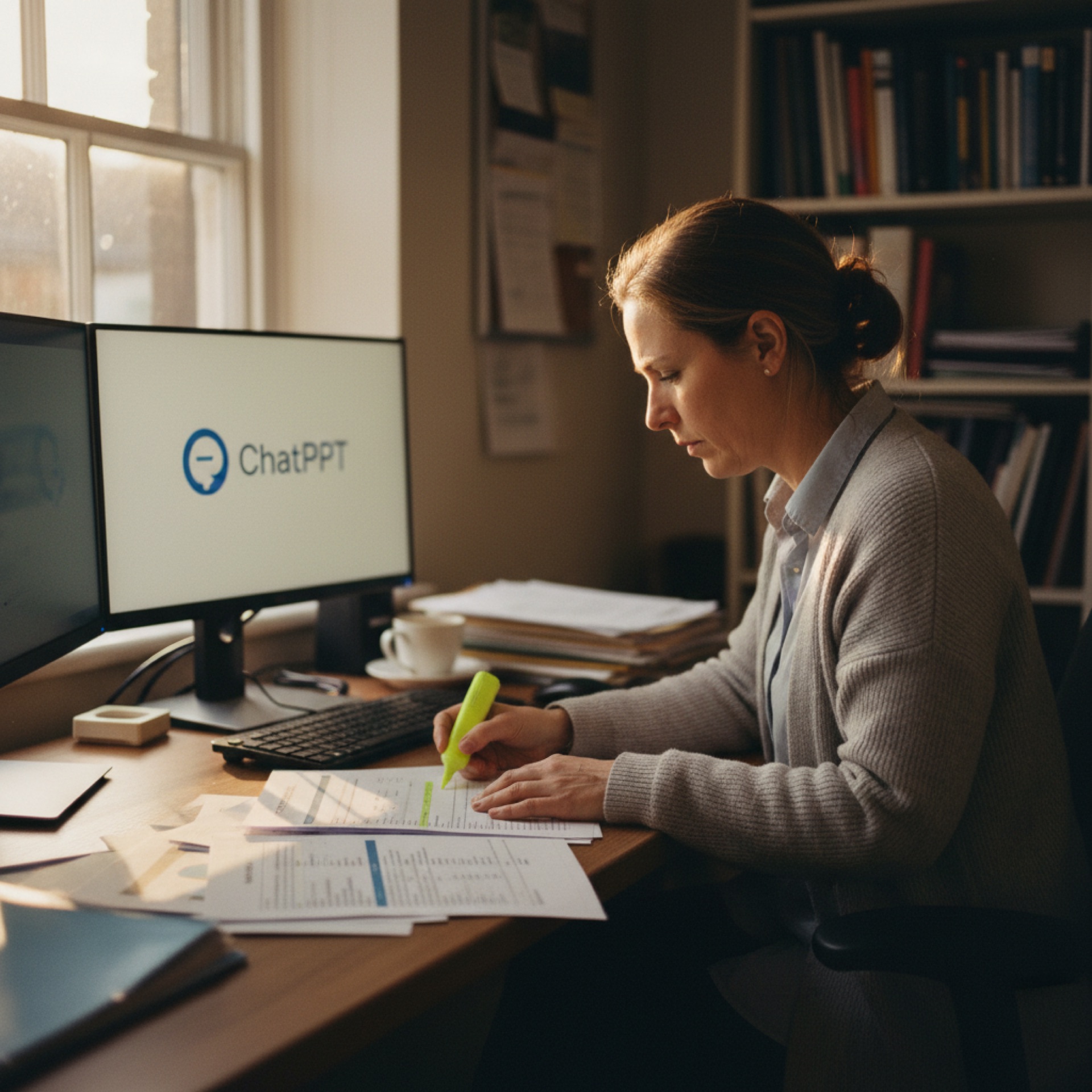
An owner-manager reviewing a printed client report with a highlighter, a laptop showing a chatbot interface beside her
TL;DR

Mata v Avianca, Ayinde v Haringey and Al-Haroun v Qatar National Bank all turned on the same failure: a professional treated chatbot output as research output and did not check the citations. The lesson is not that lawyers should avoid AI. It is that any firm producing client-facing work containing references to external sources, cases, statutes, statistics, named documents, must verify every citation before the output leaves the firm, every time.

Key takeaways

- Mata v Avianca (US, 2023) ended in a $5,000 sanction after six fabricated cases were filed in federal court. The mechanism was a lawyer treating ChatGPT as a research database rather than a draft assistant. - Ayinde v Haringey and Al-Haroun v Qatar National Bank brought the same pattern to the UK High Court in 2025, with judicial findings that the threshold for contempt had been met and pointed criticism of solicitors who outsourced verification to clients or models. - The risk generalises beyond law. An LLM that invents legal cases will invent HMRC guidance references, FCA handbook clauses, audit standards, statistics, and named reports with the same confident tone. - The professional response from the SRA, the Bar Council, the Law Society, ICAEW and ACCA converges on one principle: AI output is draft material, not research output, and human verification of every cited authority is non-delegable. - The fix for an owner-managed firm is a verification checklist someone signs off, not an assumed responsibility. The lawyers who got sanctioned did not lack training. They lacked process.

Picture the owner of a small accountancy practice on a Wednesday afternoon. Two of her senior staff have started using ChatGPT for first drafts of client letters and tax-position memos. She has read about the New York lawyer who got sanctioned for citing fake cases, and she has read about the UK barristers in the press more recently. She assumes the problem is specific to legal work. Her team is not writing court filings. They are writing accountancy memos. She closes the article and gets back to the VAT return on her desk.

That assumption is the failure.

What actually happened in the three cases?

In each case, a qualified professional treated chatbot output as research output and filed it without checking the citations. Mata v Avianca produced a $5,000 sanction in 2023. R (Ayinde) v Haringey and Al-Haroun v Qatar National Bank brought the same pattern to the UK High Court in June 2025, with judicial findings that the threshold for contempt had been met and wasted costs orders against both sides.

Mata was the first public sanction. In June 2023, attorney Steven Schwartz used ChatGPT to research a personal-injury claim against Avianca airlines in the US Southern District of New York. The model produced six case citations that supported his position. Schwartz attached them to an affidavit. None of the cases existed. The airline’s counsel could not find them. The court could not find them. Judge Castel imposed the sanction on Schwartz and his firm, and the ruling has been cited in every professional guidance note on AI ever since.

Two years later, the UK High Court ruled on Ayinde and Al-Haroun within days of each other. Ayinde involved five fabricated authorities cited in grounds for judicial review, with the Divisional Court finding that the barrister had either knowingly relied on fake cases or used AI and then given an untruthful account of doing so. Al-Haroun involved witness statements with citations that were either invented or misquoted. The claimant admitted using public AI tools. The solicitor conceded he had relied on the client’s research without independently checking it. The court called that a “lamentable failure” of the basic professional check.

Why does this matter to firms that are not law firms?

Because the failure mechanism is not legal, it is linguistic. A large language model is a probability engine over text. When you ask it for a citation it produces text that looks like a citation, scored on plausibility, not on whether the cited thing exists. That same mechanism produces plausible-looking HMRC manual references, FCA handbook clause numbers, audit standards and academic citations with identical confidence to the real ones.

The model has no concept of “real” versus “invented.” It has a concept of “what would a citation in this context plausibly look like.” Deloitte Australia learned this in 2025 when its AUD 440,000 report for the Department of Employment contained fabricated academic citations and a fake judicial quote, drafted with GPT-4o. The firm refunded part of the fee and republished the report. The pattern is identical to Mata. A professional treated AI output as research output, did not verify the citations, and the document went out with fakes inside it.

Where will you actually meet this risk in your firm?

In any client-facing document that contains a reference to an external authority. That is a wider net than it first sounds. A compliance memo citing FCA handbook paragraphs. A tax-position letter citing HMRC’s internal manual. An audit working paper citing an International Standard on Auditing. A market-analysis report citing percentages from a named industry study. A grant application citing a peer-reviewed paper.

Each one of those is a citation, and each one is fakeable by a confident-sounding model. The Doughty Street Chambers catalogue, updated in early 2026, lists at least thirty-eight UK decisions in which AI-generated content or unreliable digital evidence has surfaced. The cases include Chandra v Royal Mail Group in the Employment Tribunal and M v F in the Family Court, well outside the headline judicial-review and commercial-litigation contexts of Ayinde and Al-Haroun. The October 2025 Judicial Office guidance applies the same caution to judges: confidential information must not be entered into public AI tools, and AI output must be checked regardless of how confident it sounds.

When should you ask hard verification questions and when can you let it ride?

The cleanest rule is the one the SRA, the Bar Council and the Judicial Office all converge on. AI for low-risk, internal, non-cited work is fine. The bar rises sharply the moment the output contains a reference to an external authority, leaves the firm in any form, carries the firm’s name as the source, or will be relied on by a client, regulator or counterparty.

At that point every cited URL gets opened. Every statute reference gets cross-checked. Every HMRC manual paragraph gets opened in the manual. Every named report gets the figure verified against the report itself, not against a chatbot’s summary of the report. The person doing the check is named on the file. The check is logged.

The point of the log is not bureaucracy. The point is that when something does land wrong, the firm can show what was checked and by whom, and the partner who signed the document has not inverted the responsibility relationship the way Al-Haroun’s solicitor did when he leant on the client’s own AI-assisted research. That inversion was what the court reacted to as much as the fake cases themselves.

What this is not, and what to do this week

This is not a recommendation to ban AI from professional work. It is a recommendation to put the verification discipline in place before the first hallucination lands in a client document, rather than after. The lawyers who were sanctioned did not lack training, they had decades of it. What they lacked was a process step that made verification a checklist item with a name against it.

For a small firm starting from nothing, three moves cover the bulk of the risk. Write down which document types are allowed to contain AI-drafted content and which are not. Define the verification step for every cited reference, who does it, where they record it, and what the sign-off looks like. Train every staff member, including the one who is fast with AI and impatient with checks, that the AI sounding confident is the failure mode they are checking against, not the signal that the check is unnecessary.

The firms that get this right will use AI heavily without writing a Mata. The firms that get it wrong will end up cited in someone else’s blog post about how the pattern played out in their sector.


Sources

- Mata v Avianca, Inc. (US District Court SDNY, June 2023). Steven Schwartz sanctioned $5,000 after submitting a brief citing six non-existent cases generated by ChatGPT, with the court finding a breach of the duty of candour. Canonical first public sanction for AI hallucination in a court filing. https://www.acc.com/resource-library/practical-lessons-attorney-ai-missteps-mata-v-avianca - R (Ayinde) v London Borough of Haringey (UK Divisional Court, June 2025). Five fabricated authorities cited in grounds for judicial review, court found threshold for contempt met, wasted costs ordered, non-delegable duty to verify authorities reaffirmed. Burges Salmon analysis. https://www.burges-salmon.com/articles/102krxw/professional-conduct-and-ai-ayinde-v-haringey/ - Al-Haroun v Qatar National Bank (UK High Court, June 2025). Witness statements with fictitious or misquoted authorities, claimant admitted using public GenAI tools, solicitor criticised for relying on client's AI-assisted research without verification. DAC Beachcroft analysis. https://www.dacbeachcroft.com/en/What-we-think/AI-hallucinations-hit-the-high-court - Judicial Office guidance on AI for judicial office holders (UK, October 2025 revision). Warns that generative AI produces incorrect information in a confident tone, restricts use to low-risk tasks on non-confidential material, treats confidential data entered into public AI tools as a reportable data incident. https://www.judiciary.uk/guidance-and-resources/artificial-intelligence-ai-judicial-guidance-october-2025/ - Doughty Street Chambers catalogue of UK cases involving AI hallucinations or related digital evidence issues (early 2026). At least thirty-eight UK decisions catalogued, including Chandra v Royal Mail Group in the Employment Tribunal and M v F in the Family Court, evidencing judicial scrutiny well beyond fake case law. https://insights.doughtystreet.co.uk/post/102mi96/38-uk-cases-involving-hallucinations-ai-or-otherwise-judicial-caution-in-the-f - Damien Charlotin's global database of AI hallucination court cases. Cross-jurisdiction catalogue of sanctioned and reprimanded filings, including Mata and subsequent US, UK, Canadian and Australian incidents. https://www.damiencharlotin.com/hallucinations/ - Deloitte Australia, AUD 440,000 Department of Employment report (2025). GPT-4o used in drafting, fabricated academic citations and fake judicial quote, partial fee refund and republication required. Direct precedent for any professional firm using AI on client-facing deliverables. https://www.ndtv.com/world-news/deloittes-ai-fallout-explained-the-440-000-report-that-backfired-9417098 - ICO guidance on the right not to be subject to solely automated decision-making (UK). Sets the regulatory floor for human-in-the-loop review where AI outputs significantly affect individuals. Relevant to any firm using AI in HR, credit, or eligibility decisions. https://ico.org.uk/for-organisations/law-enforcement/guide-to-le-processing/individual-rights/right-not-to-be-subject-to-automated-decision-making/ - FCA position on AI in financial services. Confirms that existing operational resilience, outsourcing, data protection and consumer duty regimes apply to AI systems, accountability and testing standards must match any other material system. https://www.fca.org.uk/firms/ai-financial-services - MIT NANDA initiative on generative AI pilot outcomes (2025). 95 per cent of pilots fail to deliver measurable bottom-line impact, evidencing that confident AI output and useful AI output are not the same thing. https://fortune.com/2025/08/18/mit-report-95-percent-generative-ai-pilots-at-companies-failing-cfo/

Frequently asked questions

Why should an accountancy or compliance firm care about cases involving lawyers?

Because the failure mode is not legal, it is linguistic. An LLM that fabricates a case citation produces fabricated HMRC manual references, FCA handbook paragraphs, ISA audit standards, and academic citations using the same generative mechanism. The confident tone is identical whether the citation is real or invented. Any firm whose client-facing work cites external sources is exposed to the same risk that caught Schwartz, Forey and Al-Haroun's solicitor.

What is the minimum verification process a small firm should put in place?

Pick the document types where AI assistance is allowed, typically internal drafts, summaries of public material, first cuts of client letters. Define which document types it is not allowed for without sign-off. For any AI-assisted output that leaves the firm, require a named human to check every cited URL, statute, case, statistic, framework name, and HMRC or regulator reference against the primary source. Record the check. Train new staff that the AI sounding confident is the failure mode, not the safety signal.

Has the UK Bar Council or the SRA actually banned AI for legal work?

No. Both bodies have issued guidance treating generative AI as a legitimate tool subject to existing professional duties. The Bar Council's 2024 guidance on ChatGPT and generative AI, and the SRA's risk outlook material, both make the same load-bearing point: the duty to verify cited authorities is non-delegable and applies whether the draft came from a junior, a pupil, a client, or an AI. The Judicial Office guidance of October 2025 says the same thing to judges.

This post is general information and education only, not legal, regulatory, financial, or other professional advice. Regulations evolve, fee benchmarks shift, and every situation is different, so please take qualified professional advice before acting on anything you read here. See the Terms of Use for the full position.

Ready to talk it through?

Book a free 30 minute conversation. No pitch, no pressure, just a useful chat about where AI fits in your business.

Book a conversation

Related reading

If any of this sounds familiar, let's talk.

The next step is a conversation. No pitch, no pressure. Just an honest discussion about where you are and whether I can help.

Book a conversation