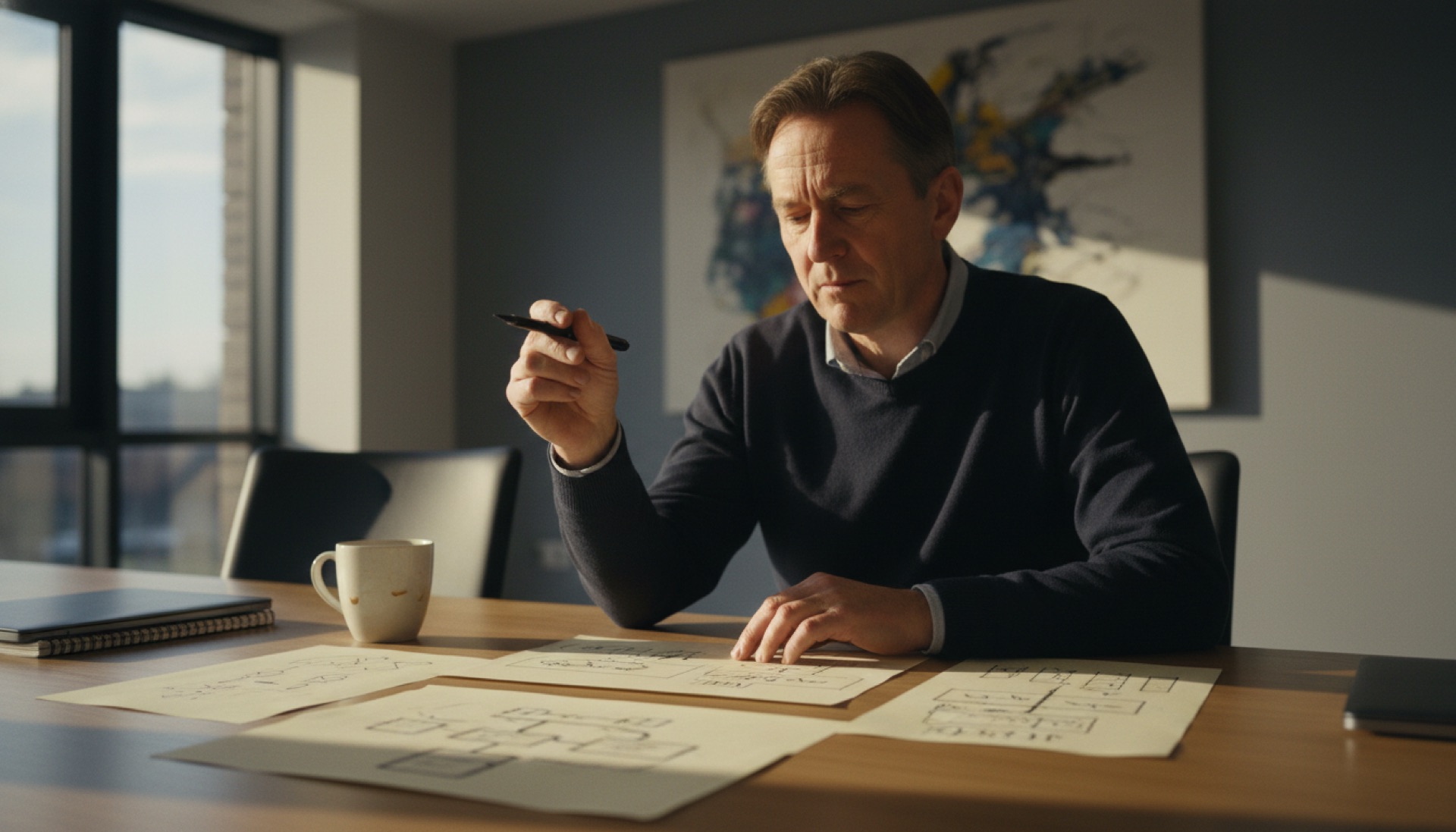
A founder of a 16-person professional services firm sits at his desk on a Tuesday night, the first time he has used the AI-drafted reply feature in his email tool. The draft sits in front of him, addressed to a long-term client he has known for nine years. It is competent. It hits the points. It is also slightly off in tone, a fraction more formal than he would write, a phrase that he would not use, an absence of the small joke they always exchange.
He has 40 unread messages and it is 9.30pm. He stares at the send button. He knows that if he sends this draft, the client will not say anything. He also knows the client will notice, and he will not know that they noticed.
What the available tooling actually does
Email assistants in 2026 include Superhuman, Shortwave, MixMax AI, HubSpot Breeze, and native AI integrations in Gmail and Outlook. The capabilities span four areas, drafting responses based on the thread context, summarising long threads or chains of communication, flagging priority messages against learned patterns, and generating proposal or follow-up drafts from templates. Otter and Fireflies handle conversation capture and turn it into structured outputs that feed into the CRM.
Each tool has a slightly different interface. The underlying capability is similar across the category.
What the time data says
Teams using these tools save approximately 31 percent of weekly email time. For a founder spending 30 percent of their working week on email, that is roughly 10 hours a week. The figure is the upside, and it is genuinely substantial. A founder reclaiming 10 hours a week has the bandwidth to do strategic or client-development work that has been crowded out for months.
The question is what the founder does with the AI-drafted output before sending. The trust trade-off lives there.
The pattern that preserves trust
The pattern that works is “AI-mediated, founder-authored.” The AI prepares the information layer. It summarises the client’s previous communications, flags unanswered questions, suggests next steps based on the relationship history. The founder uses that information to write the response themselves. Time per response drops from 30 minutes (hunting through email threads) to 10 minutes (writing in their own voice from a prepared brief). The client gets a thoughtful, contextual response. The AI is invisible.
This pattern preserves the relationship because the message is still the founder’s. The voice is theirs. The choices about what to mention and what to leave out are theirs. The AI multiplies their attention; it does not substitute for it.
The pattern that erodes trust
The trust-eroding pattern is “AI-skim-and-send.” The founder accepts AI drafts with minimal edits, sends them wholesale, repeats. Over weeks, the client notices. Responses feel slightly off, miss something they mentioned in the previous message, contradict something the founder said previously in the relationship. The relationship signal the client picks up is “I am no longer worth the founder’s full attention.”
The client does not always articulate this. They feel it. They start filtering communications differently, double-checking before they trust a commitment, calling instead of emailing on important matters. The relationship has shifted. The founder, looking at their inbox, sees that the client is engaging less and concludes the work is fine. The work is not fine; the trust is leaking. By the time it surfaces explicitly, the recovery is hard.
This pattern is particularly acute in professional services, where the founder’s judgement and attention to detail are the core value the client is paying for. An AI-drafted response that misses a nuance signals that the value is no longer being delivered.
Where AI in comms is fine even if the client knows
Some communications are transactional, and clients expect a level of systematisation. For proposal first drafts, HubSpot Breeze and similar tools can draft proposals from templates and client context. Clients do not typically care whether the proposal’s first draft was AI-written, as long as the final proposal is customised, accurate, and responsive. Contract drafts follow the same logic. Meeting summaries shared back as a record of what was discussed. Scheduling automation, follow-up reminders, calendar invitations.
For these artefacts, AI in the workflow is the unsurprising 2026 default. The trust question only kicks in for relational communication, where the founder’s voice and attention is the thing the client is paying for.
On voice cloning
Voice cloning is a separate question with a clearer answer. The technology exists; a person’s voice can be cloned from a few seconds of audio. The immediate ethical issue is the potential for unauthorised use, including deepfake scams or manipulated statements. Even with consent, there is ambiguity about how voices can be used post-cloning, like repurposing a voice actor’s cloned voice for projects they did not approve.
Legal frameworks lag the technology. Trademarks can protect brand names and distinctive phrases, but rights to a person’s voice remain unclear in many jurisdictions, including the UK and US. From a practical standpoint, voice cloning for a founder-led business is not a mainstream practice in 2026, and the reputation risk is substantial. If a client discovers they have been hearing a cloned voice rather than the founder, the breach of trust is severe and the founder has signalled that the client is not important enough to warrant their actual attention. For founder-led SMEs, voice cloning for client communication is not a reasonable option, regardless of efficiency claims.
The diagnostic for the founder
Two questions to run on the firm’s communication map. Where is my actual voice and presence the value the client is paying for? For these communications, AI prepares the information layer; the founder writes the message. Where is my voice not the central value (transactional artefacts, scheduling, routine confirmations)? For these, AI drafts and the founder reviews lightly before sending.
Many founders have not done this audit explicitly. They either default to “do everything personally” (the time cost is brutal) or “automate everything” (the trust cost is brutal). The audit is the move that lets the founder reclaim the time without losing the relationship.
What to do this week
Pick one client where the relationship matters most. Look at the last ten emails you sent them. Sort them into “I needed to write this myself” and “this could have been a prepared draft I edited.” Do not change anything yet. Just sort.
For the first set, the AI prepares (summary, context, suggested points) and you write. For the second set, AI drafts and you review lightly. Set up your email assistant to support the split, then run the pattern for two weeks. The client will not notice the change in process. They will notice that the responses still feel like you.
If you want a second pair of eyes on the split for your specific client base, book a conversation.